Thursday, March 20, 2014

FROM CHILDREN FOR CHILDREN


A manifesto written with the participation of Indian children about the issues that a large percentage of them face daily was recently unveiled by 23 local NGOs. The document was addressed to the Indian government as part of the Vote 4 Children campaign. The national media manager for Save the Children said: “Thirty six percent of Indians are children… We are fighting against child labor and for better health and quality education”.

The convenor of Vote 4 Children added that “Children can't vote, so it is important for them to influence people who represent their issues and concerns in Parliament”. The demands include increasing allocation for child protection, health and nutrition, stopping child labor, considering all people under 18 as minors, the abolition of feticide and infanticide, and implementing a national policy to combat malnutrition.

Let us continue supporting children so that their voices are heard and their rights protected.

Source: thehindu.com


Tuesday, March 4, 2014

SEEDS: A CULTURAL HERITAGE


For a long time, seeds have been a part of India’s cultural heritage. In a country where 70% of the population still live in rural and semi-rural communities, seeds are an integral part of many rituals, ceremonies and festivals that celebrate the cycle of birth, life and death. Saving seeds has been a cornerstone of the traditions that have made agriculture a way of life for many centuries.

In the 60s, the scenario began to change with the advent of the Green Revolution in India. The introduction of high-yielding seeds and the widespread use of chemical fertilizers and pesticides reduced the diversity of native seeds. When farmers started to move away from the practice of saving and exchanging seeds with neighbors and family, their knowledge about traditional agricultural systems became increasingly irrelevant.

In addition, there now exists the growing threat of genetically modified seeds (GMO) in the Indian markets for crops such as maize, mustard, peas, potatoes, bananas and others. Many environmentalists and farmers' groups are concerned about the impact of GMOs on the biodiversity of native varieties and the health problems associated with their consumption.

Traditionally, women farmers have been the main guardians of seeds in India. In times of scarcity, they can identify roots and tubers for food and medicinal needs. Women are also major producers of food in the country but are not recognized as farmers and have to fight to have land rights and access to information and loans.

The knowledge that women farmers have about natural resources is often undervalued by the state and agro-scientists. For example, some plants that poor farmers subsist on during periods of scarcity are regarded as weeds by agro-enterprises and are often sprayed with herbicides. And while women farmers provide the labor force for most agricultural activities, decisions relating to the management of farmland lie largely in the hands of men.

In view of growing climate unpredictability and increased expenditure on external resources, it is highly advisable that traditional wisdom on selection and conservation of seeds as well as natural practices be documented and promoted. Seeds are a symbol of self-reliance and key to safeguarding the biodiversity of indigenous crops on small farms across India.

Source: earthisland.org


Thursday, February 20, 2014

NGO EXCELLENCE AND LEADERSHIP AWARD FOR ASHA-KIRAN


Asha-Kiran Shelters Foundation was honoured to receive the prestigious NGO EXCELLENCE AND LEADERSHIP AWARD, 2014 on the occasion of World CRS Day 17th and 18th February 2014 in Mumbai. The award was given by World CSR Congress and presented by ABP NEWS. The award was conferred on us for our development work in the field of Education, especially the project of Migrant Children “Opening Educational Pathways for Migrant Children” (OEPMC), which involves the educational development of children of labourers at construction sites.

After announcement of the award we sent our project proposal and reports detailing of our work in the sector to the World CSR team, which goes through a diligent investigation and verification of our work and then passes on to the Jury, who then selects the finalists for the award from among the many NGOs who have applied. We were selected for our innovation and sustainability in our projects and CSR methodology.

The Objectives of World CSR Congress:

The World CSR Congress will be guided by Leaders.... who believe in the value of Sustainable CSR; that which is built in the fabric of business - making it a reality. Leaders produce Leaders Program will be a common thread uniting nations and people who take CSR more responsibly. They also believe that CSR is a tool to the Development of the Future.

We thank all of our friend and collaborators for helping Asha-Kiran to offer better development pathways to the people who need them.


Tuesday, February 11, 2014

GETTING AN EDUCATION BEFORE GETTING MARRIED


Khushboo, like her mother before her, was forced into marriage when she was just a girl. Khushboo’s father died when she was very young, leaving her family with little means. It wasn’t long before her mother and the community pressured her to marry to help her family. “I was very young, I couldn’t say anything, I didn’t understand,” she explains.

Shortly after marrying, Khushboo dropped out of school and, with no access to family planning, became pregnant. Complications arose during childbirth and even though tried to save both mother and child, her son died and she fell into a deep depression.

Despite her ordeal, Khushboo now works as a peer educator. With her colleagues, she arranges meetings and informs villagers of the ill effects of early marriages. She has even prevented several child marriages from happening. 

Watching her sister lose her baby deeply changed Priyanka too: “My sister’s experience taught me that I shouldn’t even think of marrying until I’ve finished my studies and am able to stand on my own two feet. And I hope that not only me, but that all the girls wait to be independent before they start thinking about marriage”.


LET'S CONTINUE TO OFFER THEM OTHER LIFE OPTIONS


Source: girlsnotbrides.com


Sunday, February 2, 2014

ANNUAL PRIZE DISTRIBUTION AT YASHODHARA


In the month of January and on the occasion of our Annual Gathering Function at Yashodhara Shelter, there was a Prize Distribution Program for the children who participated in various activities such as sports, individual and group games, science exhibits and projects in Hindi. Many children took part and many were happy to receive prizes for their performance.


LET'S HELP THEM EXCEL


Thursday, January 23, 2014

GLOBAL HEALTH FOR TEENS


This month’s session at the Community Development Project carried over from last month, as the topic is very wide and difficult to understand. The subject was “Self Awareness”, particularly in regard to emotions. In this session we asked the participants about their strengths, their weaknesses, the opportunities they saw for themselves, and the threats they found in their daily routine.

Another focal point was Communication – verbal and non-verbal, expressing feelings, listening skills, gestures, etc. The girls liked this topic. They said communication is an important part of life that they had never thought about. In their opinion, good communication skills are necessary. Being aware of this fact will help them in their present and future relationships. 

LET'S SUPPORT THEM IN THEIR SELF-DISCOVERY


Wednesday, January 15, 2014

OPENING PATHWAYS FOR MIGRANT CHILDREN


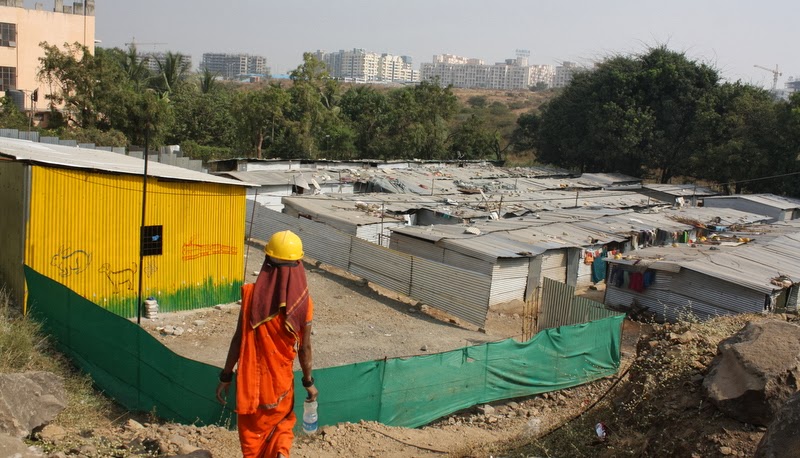
Our project “Day Care Centers for Migrant Children” makes it possible for the sons and daughters of couples who work in construction sites to improve their health and nutrition, be in a safe and nurturing environment while their parents are at work, and have access to learning experiences they would otherwise be deprived of.

Given that migrant workers are constantly moving from one construction site to another, it may not be possible to mainstream all the children into formal schooling. However, once their parents realize the importance of education, it is more likely that they will actively seek opportunities to enrol their children in school, no matter where they are. This process is facilitated by a card all schooled children receive, which is a formal record of their academic level.

Asha-Kiran looks after migrant children by providing

Non-formal education
Nutrition
Formal school enrolment and transportation
Dental/Medical checkups and treatment camps
Parent/Teacher meetings


In our last Parent-Teacher meeting, which a total of 125 parents attended, many expressed pride in having their children in school. Some said that when their children are home they talk about school all the time, and that some children teach their parents as well.

Asha-Kiran’s multi-faceted approach to child care enhances migrant children’s chances of breaking the circle of ignorance-poverty, and of becoming a valuable part of their community. To date, there are eleven Day Care Centers in full operation, with more to be started in the near future.


LET'S OPEN NEW PATHWAYS TOGETHER